



Group D at the 2026 World Cup
1xBet has Group D priced as one of the most genuinely open pools of the entire 2026 World Cup. No dominant favourite, no foregone conclusions — just four teams who each believe, with good reason, that they can advance. A host nation under enormous expectations. South America’s most underrated defensive side, back after 16 years away. Australia, resourceful as ever without a single superstar. And Turkey, arriving with arguably the most exciting young duo at the entire tournament.
Group D Overview
Group D earns its intrigue through uncertainty at every position. The United States anchor the group with home advantage and growing expectations. Paraguay return with a defensive record that borders on philosophy. Australia bring the spirit that has made them competitive at every tournament they have entered. And Turkey carry the creative genius of a generation that has been building towards exactly this moment. All four teams can advance. That alone makes this group worth watching from the first minute.
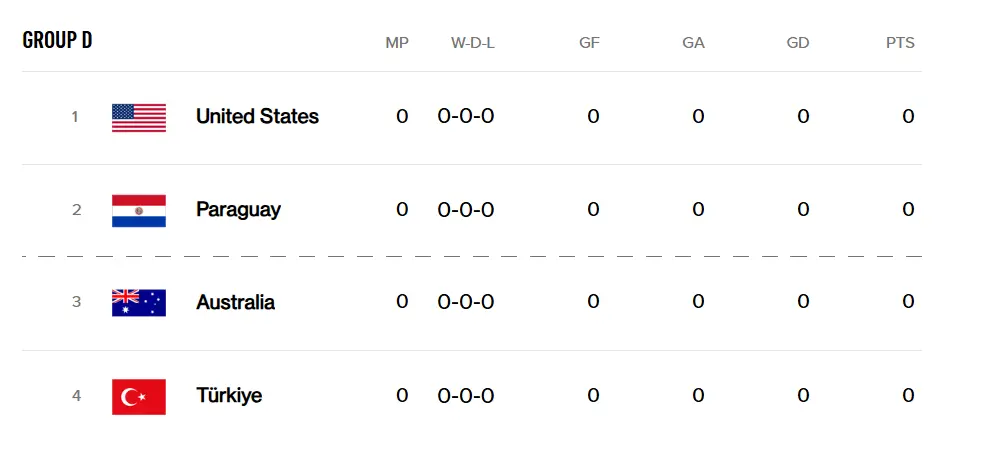
World Cup 2026 Group D
USA
The host with the most to prove
The United States are hosting the World Cup for the second time, having staged the 1994 edition — still one of the best-attended tournaments in history. Their best-ever result came back in 1930, when they finished third in Uruguay. More recently, the USMNT reached the round of 16 at the 2022 World Cup in Qatar, losing to the Netherlands (1-3) after a dramatic late comeback against Iran secured their passage from the group.
The Americans qualified automatically as co-hosts alongside Canada and Mexico. That additional preparation time has come with significant pressure. Playing at home, in front of enormous crowds, the United States are expected not only to advance from this group but to go deep into the knockout rounds.
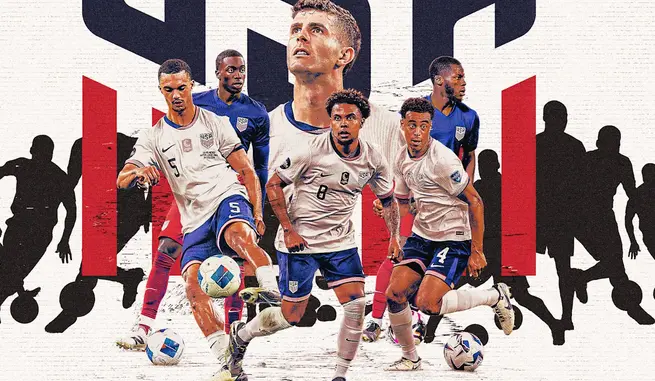
World Cup 2026. USA
Playing style and key players
The squad is built around young Europeans who have earned their places at major clubs in the top five leagues. The projected starting lineup follows a 4-3-3 with a high press and direct attacking play.
- Christian Pulisic (AC Milan) — the captain and emotional leader. The most technically complete American player of his generation, capable of creating or scoring from any position in the final third.
- Folarin Balogun — the central striker whose physicality and movement in behind give the attack an entirely different dimension. His finishing at club level demands respect from any defence.
- Tim Weah — dynamic and direct on the right flank, with genuine European pedigree and the ability to punish teams in transition.
- Weston McKennie — the midfield engine, combining defensive discipline with late runs into the box. His work without the ball holds the structure together.
- Tyler Adams — the midfield metronome. When fit, Adams sets the tempo, wins the ball and links defence to attack with quiet efficiency.
- Giovanni Reyna — perhaps the most naturally gifted American footballer of his generation. Still building towards absolute consistency, but on his day capable of unlocking any defence.
Paraguay
South America’s most dangerous secret
Brazil, Argentina, Uruguay. Who else qualifies as genuinely successful in South American football? The answer — consistently overlooked — is Paraguay. In 2010, they reached the World Cup quarter-final. Now, after 16 years away, the Guarani return with one of the most miserly defensive records in recent qualification history and a tactical identity so clear it borders on philosophy.
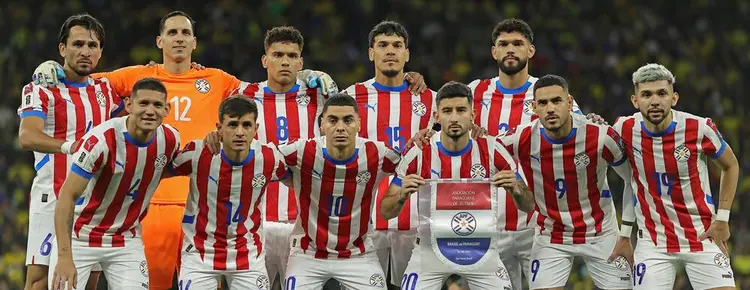
World Cup 2026. Paraguay
A remarkable qualifying campaign
Paraguay conceded just 10 goals in 18 qualifying matches — only Ecuador were more defensively solid across the entire South American cycle. The Guarani held goalless draws with Chile, Uruguay and Ecuador, keeping dominant possession teams to near-nothing without ever attempting to match them on the ball. In several of those matches, Paraguay held less than 35% possession — and left with a point regardless.
The decisive phase came at home. In front of their own supporters, Paraguay beat Uruguay (2-0), Chile (1-0), Argentina (2-1) and Brazil (1-0). Against the reigning world champions, they held just 29% of the ball. Against the five-time champions, 33%. None of it mattered — they held firm, hit on the counter and took the points. The country marked qualification with a national public holiday.
Playing style and key players
Head coach Gustavo Alfaro (63) has distilled everything he learned from 15 Argentinian club jobs — including Boca Juniors, Rosario Central and San Lorenzo — and stints with Ecuador and Costa Rica into a defensive system of exceptional sophistication. Paraguay typically set up in a 4-4-2 that can morph into a 6-2-2 when the wingers drop deep to form a second defensive bank. Compact, aggressive, impossible to play through — and utterly composed under pressure for the full 90 minutes.
- Miguel Almiron (32, MLS) — the team’s most productive attacker, with 9 goals in 73 appearances. Low by most standards, but remarkable for a squad this defensively oriented. He started the 2025 MLS season with a hat-trick of assists and arrives with momentum.
- Julio Enciso (22, Strasbourg) — the sleeping dragon of this squad. Versatile enough to play as a centre-forward or a number ten, he specialises in late goals — most of his strikes come after the 60th minute, catching opponents at their most fatigued.
- Diego Gomez (Brighton) — the squad’s most complete midfielder. Scored the goal that beat Brazil in qualifying, assisted the winner against Argentina and won Man of the Match against Peru. Quietly, he does everything.
- Juan Jose Caceres (25, Dynamo Moscow) — the first-choice right-back, voted Man of the Match in the decisive goalless draw with Ecuador. Barely dropped below a 6.5 rating across the entire qualifying cycle.
- Gustavo Alfaro — coaching since 1992, his career has been built on turning modest resources into organised, hard-to-beat sides. With Paraguay, he has delivered the country’s first World Cup in 16 years.
Australia
Seven World Cups, zero superstars, maximum spirit
Australia occupy a uniquely uncomfortable place in football history: arguably the most administratively mistreated national team in the sport. For decades they dominated Oceania, winning the OFC Nations Cup four times, only to be repeatedly denied a direct World Cup berth and forced into intercontinental play-offs against far more experienced South American opponents.
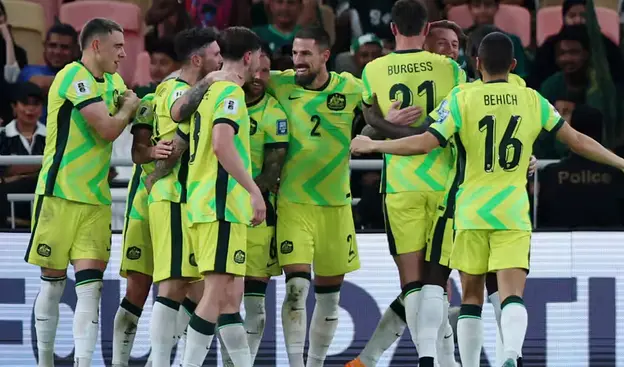
World Cup 2026. Australia
The results were painful — eliminated by Scotland (1986), Argentina (1994), Iran (1998) and Uruguay twice. The nadir came before the 2002 World Cup, when they went through their qualifying group with a 72-1 goal difference — including a 31-0 demolition of American Samoa — then lost to Uruguay in the play-offs as though none of those matches had ever happened.
Relief came in 2005, when the Asian Football Confederation invited Australia to switch confederations. Guus Hiddink immediately delivered a World Cup place — beating Uruguay in the decisive play-off on penalties — and led the Socceroos to the round of 16 in Germany, where they gave Italy a genuine game before losing (0-1). Australia have not missed a World Cup since, and in Qatar 2022 reached the last 16 before losing to eventual champions Argentina (1-2).
Qualifying for 2026
The second round was a formality — six wins, 22 goals, zero conceded against Lebanon, Bangladesh and Palestine. The third round proved more testing. A shock opening defeat to Bahrain (0-1) was followed by an extended run of draws before a brilliant four-game winning streak at the end of the campaign — including results against Japan and Saudi Arabia — secured second place in the group with six points to spare.
Playing style and key players
Head coach Tony Popovic (52) — a former Socceroos player who captained Crystal Palace — has been in management for 18 years. His Australia play direct, honest football: five at the back against stronger opponents, controlled chaos against equals, and shots from range as a tactical tool when the squad lacks the craft to break teams down elegantly.
- Alessandro Circati (22, Parma) — the most valuable player in the squad. Could not break into Italy’s youth ranks, chose Australia and has quickly become the defensive anchor. Expected to start despite a knee ligament injury earlier in the cycle.
- Mat Ryan (33, Levante) — the most-capped active player in the squad. Not spectacular, but consistently effective — he made nine saves against Real Madrid in 2025-26. Exactly what Australia need between the posts.
- Martin Boyle (32, Hibernian) — the third-highest scorer among active players (10 goals in 39 caps) and the team’s most flexible attacker. Can operate anywhere across the front line and brings direct running that disrupts organised defences.
Turkey
The most exciting young duo at the tournament
Turkey were bronze medallists at the 2002 World Cup — a result so remarkable it still feels almost accidental — and had been absent from the tournament ever since. Qualifying failures, administrative scandals and periodic disciplinary chaos defined the years that followed. Then, almost imperceptibly, a new generation arrived.
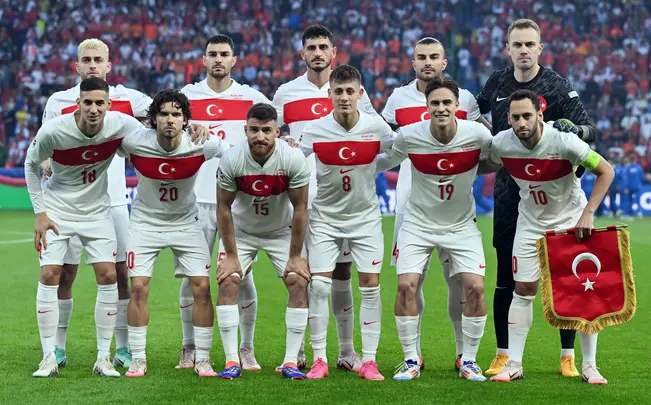
World Cup 2026. Turkey
24 years of waiting, then a fresh start
Turkey’s 2002 campaign remains their finest hour. They advanced from the group stage, beat Japan (1-0) in the round of 16, eliminated Senegal on a golden goal in the quarters, lost the semi-final to Brazil and then beat South Korea (3-2) in a thrilling bronze match. The hero of that final game was Ilhan Mansiz — who, after retiring from football, went on to become a champion figure skater in pair skating.
The years that followed brought embarrassment: the infamous tunnel brawl against Switzerland in World Cup qualifying in 2005, repeated failures and cycles producing only fourth-place finishes in their qualifying groups. Only the emergence of the new generation at Euro 2024 — where Turkey reached the quarter-finals — signalled that the wait might finally be over.
Qualifying for 2026
Turkey’s group featured Spain, Georgia and Bulgaria. Spain were untouchable at the top; Bulgaria were rooted to the bottom. Everything came down to Turkey versus Georgia for second place. One result clarified the stakes: Spain beat Turkey 6-0 on Turkish soil. Turkey responded immediately — hammering Bulgaria 6-1, beating Georgia 4-1 at home and finishing the campaign with a composed 2-2 draw against Spain. They qualified for the play-offs 10 points clear of Georgia.
In the play-offs, both one-leg ties, Turkey beat Romania (1-0) and Kosovo (1-0) without conceding. Neither opponent created even one expected goal. Quiet, mature, controlled. Turkey arrive at their third World Cup looking nothing like the side of 2002 — and everything like a team ready to make a deep run.
Playing style and key players
Head coach Vincenzo Montella (51) — who never quite found his best self at Roma, Fiorentina, Milan or Sevilla — has finally found his ideal environment in Turkey. He has built a system that channels natural Turkish creativity through pragmatic Italian structure: patient possession, high pressing at the right moments and quick transitions rather than constant attacking chaos.
- Arda Guler (21, Real Madrid) — the jewel of this generation. Already a key figure at one of the world’s biggest clubs, Guler brings imagination and technical quality that is rare at any age and extraordinary for a 21-year-old. When Turkey are struggling, he is the man who can change a game with a single moment.
- Kenan Yildiz (20, Juventus) — slightly under the radar compared to Guler but arguably the more consistent performer at club level. Scored in both play-off wins and contributed a brace against Bulgaria. His intelligent movement without the ball is as valuable as his direct contributions.
- Hakan Calhanoglu (32, Inter Milan) — the veteran midfield anchor with over 100 caps and 22 international goals. Montella has freed him from creative responsibility, allowing him to focus on balance, coverage and the occasional thunderous strike.
- Vincenzo Montella — reached the Euro 2024 quarter-final in only his first major tournament with this squad. Turkey’s most important tactical decision has been letting Montella teach his players when not to attack.
Who Advances from Group D
| Team | 1xBet |
|---|---|
| USA | 1.11 |
| Turkey | 1.24 |
| Paraguay | 1.48 |
| Australia | 1.89 |
The USA at 1.11 are treated by the market as near-certainties to advance — home support, a genuinely strong squad and the most straightforward group game on paper against Australia. Turkey (1.24) are priced as near-certain qualifiers too, reflecting real respect for Guler, Yildiz and the defensive solidity they showed in the play-offs. The interesting story is Paraguay (1.48) — a team that beat Brazil and Argentina at home in qualifying, priced only fractionally behind Turkey. Those who watched their South American campaign will not be surprised by the market’s caution. Australia (1.89) are the outsiders, but an Australian side dismissed as outsiders has a habit of complicating things for everyone.

Group D. World Cup 2026. Odds at 1xBet
Who Wins Group D
| Team | 1xBet |
|---|---|
| USA | 2.39 |
| Turkey | 2.76 |
| Paraguay | 4.70 |
| Australia | 8.00 |
The USA (2.39) are slight favourites to top the group, but the market is remarkably tight at the top. Turkey (2.76) are barely half a point behind — bookmakers believe this group could ultimately be decided by the direct clash between the hosts and the Turkish youngsters. Paraguay (4.70) at that price represent genuine value for anyone who followed their qualifying campaign closely. A defensive side that beat every South American team at home — including the last two world champions — deserves more respect than fourth billing in Group D. Australia (8.00) — an accurate reflection of the gap in individual quality, even if the spirit is never in question.
Our Predictions
Group D will produce at least one result that surprises a wider audience — the only question is which one. The USA advance, almost certainly. The second spot is a genuine contest between Turkey and Paraguay, settled by whichever side handles the pressure of a knockout-feel game better. Turkey’s quality in the final third and the genius of Guler and Yildiz gives them a narrow edge on paper, but Paraguay’s qualifying defensive record — 10 goals conceded in 18 matches — is not the kind of thing that evaporates simply because the competition changes.
Australia will push whoever they face. They never go quietly. And somewhere in this group, there will be a moment — a Gomez goal, a Guler dribble, a Ryan save — that reminds everyone why the World Cup is better with 48 teams.
Other Groups WC-2026 at 1xBet
 Aiden Brooks
