



Group G at the 2026 World Cup
1xBet has Group G built around a single overriding question: can anyone give Belgium a genuine contest? The Red Devils arrive as overwhelming favourites, carrying the weight of a new generation trying to escape the shadow of the golden one. Egypt bring two of the most technically gifted forwards in African football — and a coach who refuses to let them express it. Iran come to their fourth consecutive World Cup still chasing a first-ever knockout appearance, hampered by circumstances far beyond football. And New Zealand, the only unbeaten team at the 2010 World Cup, return after 16 years with absolutely nothing to lose.
Group G Overview
Four teams, one dominant favourite and a genuine battle for everything else. Belgium arrive rebuilt and purposeful after the golden generation’s twilight. Egypt carry the weight of Salah and Marmoush — individual brilliance trapped inside a system that struggles to use it. Iran bring organisation, resilience and a political backdrop that makes their presence here remarkable. And New Zealand bring the spirit of 2010, Chris Wood and the refreshing freedom of a team with zero pressure and maximum motivation.
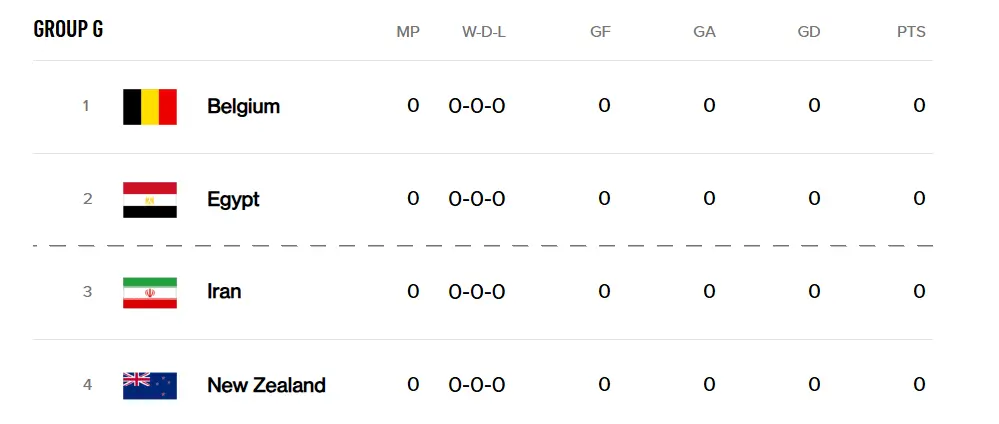
World Cup 2026 Group G
Belgium
After the golden generation: the long road back
Belgium’s golden generation — De Bruyne, Hazard, Lukaku, Courtois, Witsel — peaked at the 2018 World Cup in Russia, where they finished third. It remains the high-water mark of Belgian football in the modern era. Four years later in Qatar, the same ageing squad crashed out in the group stage. The project required rebuilding.
That rebuild is now underway. The golden generation’s players have either retired from international football or accepted reduced roles. A new set of names — Amadou Onana, Charles De Ketelaere, Jeremy Doku, Lois Openda — have taken the lead. Belgium won European qualifying Group J, including a 7-0 dismantling of Liechtenstein, and arrive in North America in a transitional but purposeful state.
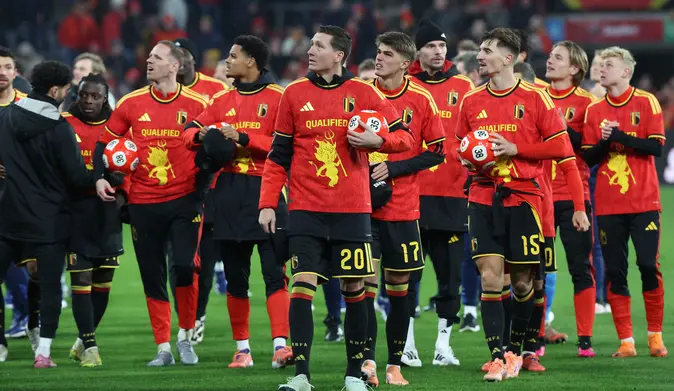
World Cup 2026. Belgium
Playing style and key players
Belgium under their current setup maintain the positional discipline and defensive structure that has always characterised their best performances. The new generation brings more directness, more athleticism in midfield and genuine pace in wide areas — areas where the previous side sometimes lacked.
- Romelu Lukaku — still the reference point in attack and Belgium’s all-time leading scorer. Questions about his form and fitness have followed him for years, but when he is right, no Belgium side functions better. His hold-up play, movement in behind and ability to finish under pressure remain elite-level qualities.
- Jeremy Doku (Manchester City) — the most exciting Belgian attacker of the new generation. Rapid, unpredictable and difficult to contain in one-on-one situations. His ability to draw fouls, create overloads and deliver end product makes him one of the more entertaining players at this tournament.
- Charles De Ketelaere (Atalanta) — the creative linchpin between midfield and attack. His reading of space and ability to combine in tight areas have developed significantly since his difficult spell at AC Milan. At Atalanta he has found his best environment.
- Amadou Onana (Aston Villa) — the physical and technical anchor of the midfield. Tall, powerful, comfortable with the ball and aggressive without it. His presence gives Belgium a platform from which the creative players can operate.
- Lois Openda (RB Leipzig) — one of the most clinical finishers in European football, with a goals-per-90 record that demands attention. His movement in behind and instinct around the box provide a constant direct threat.
- Matz Sels (Nottingham Forest) — the first-choice goalkeeper. Consistent and reliable at club level, his distribution and command of the area suit Belgium’s style of building from the back.
Egypt
Salah, Marmoush and a coach who won’t let them play
Egypt are one of the most contradictory sides at the entire tournament. They have Mohamed Salah — one of the most decorated players of his generation — and Omar Marmoush — one of the most creative forwards in the Premier League and Bundesliga over recent seasons. Their combined market value dwarfs the rest of the squad. And yet, under head coach Husam Hassan, Egypt consistently play one of the most passive, risk-averse styles of any team at this level.
The pattern is well established. Against stronger opponents, Egypt retreat into their own box and wait. Against weaker opponents, they circulate the ball without creating danger. The formula is straightforward and suffocating: distribute possession sideways, find Salah or Marmoush, hope for a moment of individual brilliance. When that brilliance does not arrive — and against organised defences it frequently does not — Egypt produce nothing.
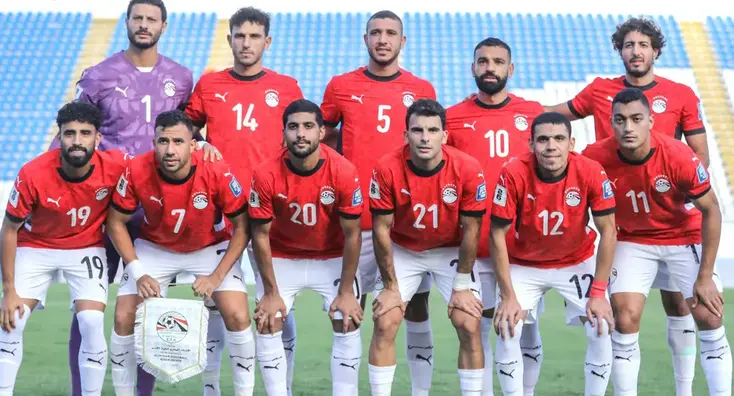
World Cup 2026. Egypt
A World Cup history defined by caution
Egypt were the first African side to appear at a World Cup, in 1934. Their second appearance came 56 years later in Italy 1990, where they finished third in a group with England, Ireland and the Netherlands — held goalless by both the Irish and Dutch, beaten narrowly by England (0-1). In Russia 2018, they finished 31st out of 32 teams: defeated by Uruguay (0-1), Russia (1-3) and Saudi Arabia (1-2). The cautious approach produced three defeats and minimal attacking output despite having Salah available.
Qualifying and AFCON form
Egypt’s qualifying group — Djibouti, Burkina Faso, Sierra Leone, Ethiopia and Guinea-Bissau — was one of the most straightforward in Africa. Eight wins, two draws, 20 goals scored, two conceded. Salah scored 42% of the team’s qualifying goals. At AFCON 2025, Egypt reached the semi-finals but scored zero goals against Senegal and Nigeria across 210 minutes of football, generating just 0.47 expected goals across both matches combined.
Playing style and key players
- Mohamed Salah (Liverpool) — the captain and national icon. The weight of an entire country’s football hopes rests on his shoulders at every tournament. In 2025-26 his club form has dipped noticeably. At AFCON, he was largely absent in the decisive games. He is two goals behind Egypt’s all-time scoring record. Whether he finds his best form on the biggest stage is the central question.
- Omar Marmoush (27, Manchester City) — the player who might actually save this tournament for Egypt’s supporters. Younger, faster and less burdened by expectation than Salah, Marmoush has the pace and creativity to punish teams who give him space. Whether Hassan’s setup provides that freedom is a different question entirely.
- Rami Rabia (32, Al-Ain) — the first-choice centre-back who organised Egypt’s defensive line through the AFCON knockout rounds. Consistent, disciplined and reliable — exactly what this system demands of its defenders.
- Husam Hassan — a genuine Egyptian football legend with 176 caps, 68 goals and seven Africa Cup of Nations titles as a player. As a coach, his cautious tactical approach has delivered results in qualification but left supporters frustrated by the waste of attacking resources.
Iran
Seven World Cups, zero knockout appearances — and a country in crisis
Iran are the most consistent qualifying team in Asian football after Japan and South Korea. They have appeared at five of the last six World Cups and have never once been eliminated without scoring. In Russia 2018, they came within one point of the knockout rounds — beating Morocco and drawing dramatically with Portugal. In Qatar 2022, they defeated Wales (2-0) but lost heavily to England (2-6) and narrowly to the United States (0-1).
That pattern — competitive enough to win games, not quite competitive enough to advance — is what Iran have been trying to break for decades.
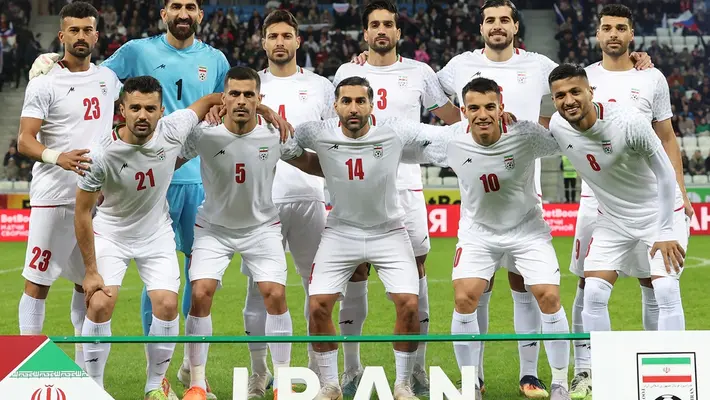
World Cup 2026. Iran
Qualifying — dominant as ever, with one shadow
Iran navigated Asian qualifying in their customary fashion. Second round: first place in a group with Uzbekistan, Turkmenistan and Hong Kong — comprehensive wins over Turkmenistan (5-0) and Hong Kong (4-0). Third round: first place again, with four clean-sheet victories over North Korea (3-0), Kyrgyzstan (1-0) and the UAE (2-0 twice). Seven wins from ten, the most goals in their group, direct qualification secured.
The one significant shadow over the squad is Sardar Azmoun — the former Rubin Kazan, Zenit and Rostov forward well known to Russian football followers — who suffered a serious leg fracture in September 2025. Whether he recovers in time remains genuinely uncertain. Without him, Iran’s attacking options are considerably reduced.
Beyond the football, Iran face serious challenges. Domestic protests, economic hardship and political instability have created an atmosphere in which football has moved far down the national agenda. Most significantly, Iranian fans may be denied visas to travel to the United States, meaning the team could play without any meaningful support in the stands throughout the tournament.
Playing style and key players
Iran play pragmatic, organised football under Amir Ghalenoei. They control space rather than possession, defend compactly and rely on their creative attackers to produce moments on the counter. The approach is direct and deliberate — not beautiful, but functional.
- Mehdi Taremi (Inter Milan) — the most complete player in the squad and the team’s primary attacking reference point. 54 goals in 100 international appearances. His experience working under elite coaches at Porto and Inter has given him a tactical sophistication rare in this squad. He can operate as a centre-forward, second striker or wider attacker.
- Amirhossein Hosseinzadeh (25, Tractor) — the right-winger who has become a first-choice starter almost immediately after breaking into the squad. Five goals in 14 appearances, nearly always completing 90 minutes. His pace and directness cause problems for any defensive line that gives him space.
- Hossein Kanani (31, Persepolis) — the defensive anchor. Six international goals as a centre-back — an unusually high tally that reflects how frequently he pushes forward at set-pieces. His experience with the national squad makes him the most important figure in defence.
- Amir Ghalenoei (62) — on his second stint as Iran head coach, having previously led them to an Asian Cup quarter-final in 2006-07. Five Iranian league titles as a club manager. He has delivered qualification efficiently; the question is whether he can finally go one step further.
New Zealand
The only unbeaten team in 2010, back after 16 years
New Zealand’s World Cup history is brief but memorable. Their first appearance in 1982 in Spain ended in three heavy defeats. Their second, in South Africa 2010, produced one of the tournament’s most charming stories: three draws, no defeats — the only unbeaten team at the tournament. They held Slovakia, drew with reigning world champions Italy (1-1) and finished third in their group above the Azzurri, before going home without advancing.
Now, after 16 years away, the All Whites return.
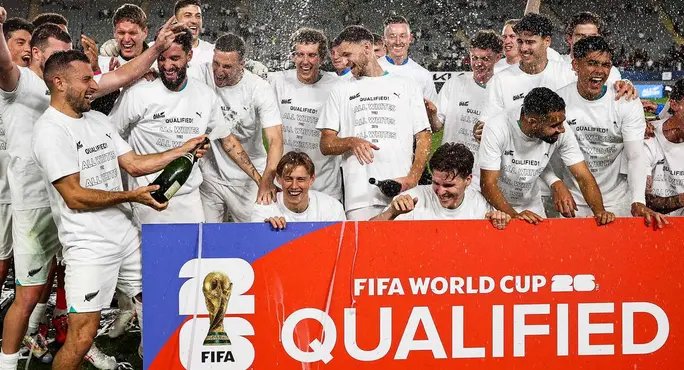
World Cup 2026. New Zealand
Qualifying — the straightforward road to the World Cup
New Zealand’s OFC qualifying campaign was about as competitive as one might expect from a dominant Pacific football nation. Group stage: Tahiti (3-0), Vanuatu (8-1), Samoa (8-0). Play-offs: Fiji (7-0) in the semi-final, New Caledonia (3-0) in the final. Not a single goal conceded across the knockout rounds. Direct qualification secured under the new expanded format — the first time Oceania’s winner reached the World Cup without an intercontinental play-off.
Playing style and key players
In Oceania, New Zealand dominate with the ball, create freely and attack with variety. In the World Cup group stage, they will transform entirely — deeper, more defensive, relying on counter-attacks and the aerial power of Chris Wood as a primary weapon. That pragmatic adaptation is entirely deliberate.
- Chris Wood (Nottingham Forest) — the captain, all-time leading scorer and the player every New Zealand supporter looks to. A consistent 20-goal Premier League season for Forest in 2024-25. His aerial presence, hold-up play and ability to win individual duels at the highest level makes him a genuine threat even in games where New Zealand barely touch the ball in the opposition half.
- Kosta Barbarouses — Wood’s deputy and a very different type of forward. At 171cm, he operates as a modern pressing forward rather than an aerial target. Technical, intelligent without the ball and capable of contributing across the front line. Russian football followers may remember him from a stint at Alania Vladikavkaz in 2011.
- Marco Stamenic (23, Swansea) — the most promising talent in the squad. As a holding midfielder, he controls the balance between counter-attack and defensive solidity. His composure and reading of the game belie his age.
- Darren Bazeley — the head coach who spent almost his entire playing career at Watford and Walsall in English football. After retiring, he moved immediately into coaching in New Zealand, spending 13 roles in the country before taking the national job. He inherited a dominant OFC setup and has maintained it.
Who Advances from Group G
| Team | 1xBet |
|---|---|
| Belgium | 1.02 |
| Egypt | 1.35 |
| Iran | 1.49 |
| New Zealand | 2.35 |
Belgium at 1.02 is not a price — it is a declaration. No bookmaker seriously considers a scenario in which the Red Devils fail to advance from a group containing Egypt, Iran and New Zealand. The squad is too deep, the coaching too experienced, the quality gap too large. Egypt (1.35) are positioned as comfortable second-favourites, which reflects their individual quality rather than their collective output — Salah and Marmoush are capable of deciding games by themselves. Iran (1.49) are priced almost identically to Egypt, which tells its own story. The market sees these two sides as roughly equivalent in terms of advancement chances, with the political and logistical challenges surrounding the Iranian team already factored in. New Zealand (2.35) — the odds imply roughly a one-in-three chance of progress, which probably overstates their realistic prospects, but the 2010 precedent exists and Chris Wood is a genuine Premier League-level striker.

Group G. World Cup 2026. Odds at 1xBet
Who Wins Group G
| Team | 1xBet |
|---|---|
| Belgium | 1.363 |
| Egypt | 5.50 |
| Iran | 7.10 |
| New Zealand | 21.00 |
Belgium (1.363) carry one of the shortest prices for group victory across the entire tournament. Justified entirely — this is a squad built to win every game in the group and enter the knockout phase as a top seed. Egypt (5.50) — first place is possible only if Belgium have a serious off-day and Egypt produce their best football. The odds are generous enough to be tempting; the football is too conservative to make it likely. Iran (7.10) — first place would require beating both Egypt and Belgium, which demands performances well beyond anything Iran have produced at a World Cup in recent memory. New Zealand (21.00) — the most romantic outcome available in Group G, and also the most extraordinarily unlikely.
Our Predictions
Group G will confirm Belgium’s status as a tournament contender and produce a genuine battle for second place. The Red Devils win the group without excessive drama — Doku and Openda create enough chances, Lukaku converts some of them and the defensive unit does its job.
The second spot will be decided by Egypt versus Iran. Egypt have superior individual quality; Iran have superior collective organisation. If Salah finds the tournament form that has occasionally eluded him on the international stage — and Marmoush is given genuine freedom — Egypt advance. If the Iranian defensive structure and Taremi’s threat on the counter prove too much for Hassan’s passive approach, Iran take second. The lean is towards Egypt, conditional on the two stars performing. But it is genuinely close.
New Zealand will push whoever they face in the early rounds. Wood will score at least once. And if Egypt and Iran are both below their best at the same moment, the All Whites might complicate things further. Don’t dismiss the 2010 precedent entirely.
Other Groups WC-2026 at 1xBet
 Aiden Brooks
