



Group I at the 2026 World Cup
1xBet has Group I as the one that every neutral football fan has circled on their calendar. Two-time world champions with the most frightening attacking depth in the tournament. The best scorer in World Cup qualifying history, finally making his first major tournament appearance. Africa’s most complete side, arriving with a grievance and a point to prove after having a continental title stripped away. And Iraq — a team whose story of survival, persecution and persistence is unlike anything else in football. This is not just a group stage. It is four separate stories converging on the same three venues, and only two of them will have a happy ending.
Group I Overview
France arrive with Mbappe, Olise and a squad whose bench would challenge most nations’ starting lineups. Norway bring Haaland — finally at a World Cup at 25, with 55 international goals already scored and a qualifying record that belongs in a different statistical universe. Senegal come furious, stripped of an AFCON title they won on the pitch and determined to make a statement. And Iraq have taken 40 years and a promise made by a 20-year-old striker to get back here. Four stories. Two places.
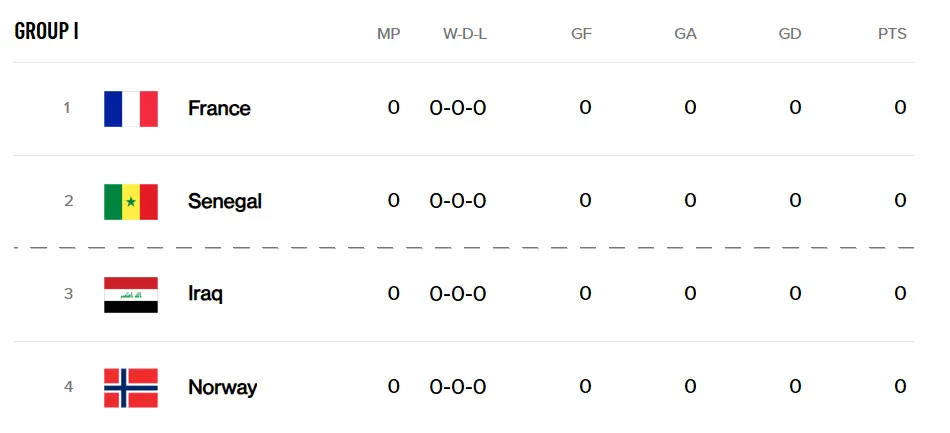
World Cup 2026 Group I
France
Two titles, a generation of stars and an unfinished argument with history
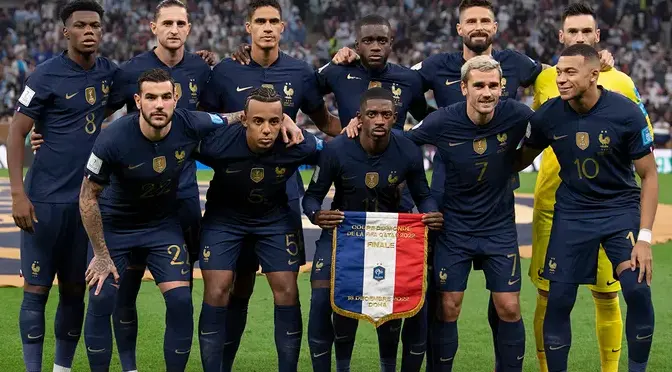
France have won the World Cup twice — 1998 on home soil, 2018 in Russia — and reached the final in 2022, losing to Argentina in a penalty shootout after one of the most dramatic final-hour comebacks in the tournament’s history. No nation has been closer to a third title in recent memory. Didier Deschamps guided the team through all three of those finals; now France arrive under new leadership, with a squad that blends the established names of 2022 with younger talent that has been waiting for exactly this moment.
World Cup 2026. France
Qualifying — businesslike and dominant
France won European qualifying Group D without difficulty. The depth available speaks for itself: Mbappe, Olise, Dembele, Kolo Muani and Marcus Thuram in attack; Kante, Camavinga, Rabiot, Tchouameni and Zaire-Emery in midfield; Saliba, Upamecano and the Hernandez brothers in defence. The starting XI virtually selects itself. The bench would challenge most other nations’ first teams.
Playing style and key players
France’s style under their current setup is direct and devastating in transition. They press high when the opportunity presents itself and move quickly from defence to attack through the quality of their individual carriers.
- Kylian Mbappe — the central figure of this squad and one of the two or three best players in the world. His pace, finishing and ability to change the shape of a defensive line make him the primary concern for every opponent in this group and beyond. The question for France is not whether Mbappe will contribute, but whether the system around him will maximise his threat as effectively as the 2018 setup did.
- Michael Olise (Bayern Munich) — the revelation of this French generation. Technically exquisite, capable of playing wide or centrally, he creates goals and chances with equal frequency. His emergence gives France a second attacking dimension that no opponent can suppress while also watching Mbappe.
- Ousmane Dembele — the direct winger who has finally found the consistency to match his ability at club level. His pace and dribbling in one-on-one situations are a persistent threat on the right side.
- William Saliba (Arsenal) — the defensive anchor who has become one of the most reliable centre-backs in European football. His composure, reading of the game and aerial dominance give France’s defensive unit a level of calm that was sometimes missing in previous tournaments.
- N’Golo Kante — if fit, still one of the most important players France can put on the pitch. His energy, pressing intensity and recovery runs have no equivalent in this squad.
- Aurelien Tchouameni (Real Madrid) — the deep-lying midfield anchor who provides the positional discipline that allows France’s more dynamic players to operate with freedom.
- Eduardo Camavinga (Real Madrid) — brings dynamism, aggression and versatility from the left side of midfield, capable of drifting wide or arriving late into attacking positions.
Norway
Haaland at a World Cup — finally
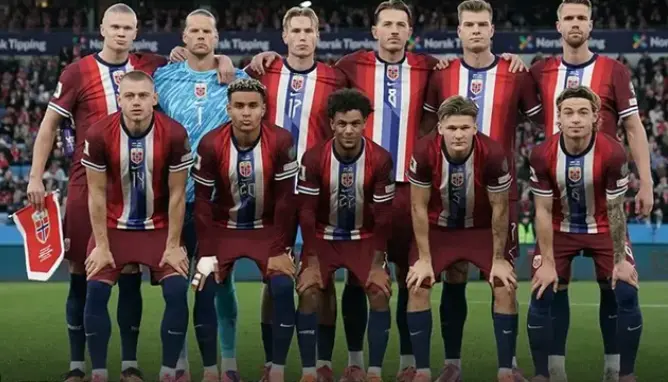
Norway have been absent from World Cups for 28 years. Every tournament without Erling Haaland has felt like an incomplete picture of what he might achieve on the grandest stage. The wait is over. Norway qualified for the 2026 World Cup with a perfect record — eight wins from eight games — scoring freely, defending resolutely and sending a very clear message in the process.
World Cup 2026. Norway
A qualifying campaign built around revenge
Norway’s qualifying group contained Moldova, Estonia, Israel and Italy — and it is the last name that carries the most historical weight for Norwegian football. Italy eliminated them at the 1938 World Cup. Italy knocked them out in the round of 16 at the 1998 World Cup. Italy took an Olympic gold medal in 1936 by beating Norway in the decisive match. The atmosphere when these two sides met was not neutral.
Norway won the first leg in Italy 3-0. The return in Oslo finished 4-1. The message was delivered. Eight wins, five goals conceded, top of the group. The World Cup returns to Scandinavia for the first time since 1998 — and this time with Haaland and Odegaard at the peak of their powers.
Playing style and key players
Head coach Stale Solbakken has built Norway’s system around two non-negotiable principles: the ball must reach Haaland quickly, and Odegaard must have the space to find him. The system uses a 3-4-3 or 4-3-3 depending on the opponent, with wide players who press aggressively and a high defensive line that requires genuine confidence at the back.
- Erling Haaland (Manchester City) — the defining figure of this World Cup. He scored 16 goals in eight qualifying games — a qualifying record. He has scored 55 goals in 48 international appearances. He is the leading contender for the Golden Boot and one of the three or four players most likely to define this tournament’s narrative. His combination of pace, aerial dominance, movement off the ball and finishing from any angle makes him the most complete centre-forward in the world.
- Martin Odegaard (Arsenal) — the creator who links everything Norway do. Eighteen assists in 67 international appearances understates his influence — his ability to find angles, receive under pressure and find Haaland in tight situations is what separates Norway from a team that simply launches crosses and hopes. Without Odegaard, Norway are significantly more predictable.
- Oscar Bobb (Manchester City) — the most versatile attacker in the squad beyond Haaland. Capable of playing anywhere across the front three or in midfield, he brings unpredictability and a consistent goal threat from outside the penalty area.
- Stale Solbakken (57) — spent most of his playing career in Norway, then built a coaching reputation at Cologne, Copenhagen and Wolverhampton before taking the national team job.
A notable open question: reports suggest that Russian goalkeeper Nikita Khaikin — who produced outstanding performances for Bodo/Glimt in the 2025-26 Champions League — may be in the process of obtaining Norwegian citizenship. If completed in time, he could become Norway’s starting goalkeeper for the tournament.
Senegal
The Lions of Teranga, furious and motivated
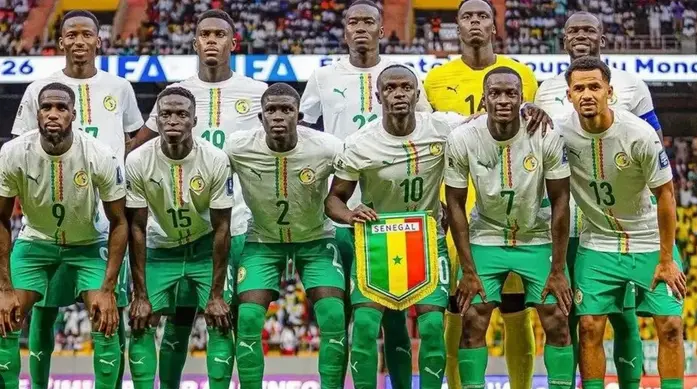
Senegal’s 2002 World Cup run remains one of the greatest stories in the tournament’s history. Their opening game defeat of France — who had won the World Cup four years earlier with many of the same players — remains one of the most famous upsets ever. The tactical sophistication they showed, pressing with a 4-1-4-1 and counter-attacking at pace, was not supposed to exist in African football at that time. They reached the quarter-final, losing narrowly to Turkey. Now, 24 years later, a generation of similar talent arrives with a specific instruction: go further.
The additional motivation is tangible. Senegal won the 2026 Africa Cup of Nations in January — beating Morocco in the final with a goal scored in extra time. Then the title was stripped. After Senegal’s players briefly left the pitch to protest a penalty decision, officials ruled it a technical defeat. Senegal are now pursuing legal action to reclaim the trophy. They arrive simultaneously as African champions and as a team whose honour has been formally questioned. That combination of pride and grievance is a powerful motivator.
World Cup 2026. Senegal
Qualifying — comfortable and efficient
Senegal’s group — Sudan, Togo, South Sudan, DR Congo and Mauritania — offered no genuine resistance. Seven wins, three draws, 22 goals scored, three conceded. The only team to push them was DR Congo, who were within touching distance until the final round. Senegal held their nerve and qualified directly for their fourth World Cup. The rematch with Togo — a team that had twice denied them qualification in previous cycles — produced the desired result: a 2-0 home win to bury that particular ghost.
Playing style and key players
Senegal under head coach Pape Thiaw play physically demanding, high-pressing football with genuine technical quality throughout the squad. They are not the stereotypical deep-sitting, counter-punching African side — they dominate. Two powerful central defenders set the tone, a double pivot of combative midfielders controls the centre, and fast wide players operate with significant creative freedom.
- Sadio Mane (Al-Nassr) — the captain, record scorer and spiritual leader of this squad. His role extends beyond goals — he manages the emotional temperature of the group, motivating when needed and calming when required, as demonstrated in the AFCON final incident. Two goals and three assists at AFCON 2025, including the semi-final winner against Egypt. At 34, his physical intensity has reduced slightly, but his impact on every game remains enormous.
- Kalidou Koulibaly (on loan, Saudi Arabia) — the defensive colossus who has anchored this backline for over a decade. At 35, he remains physically dominant and psychologically essential. His presence visibly calms the players around him; his absence creates defensive anxiety that no other individual can compensate for.
- Idrissa Gueye (Everton) and Pape Gueye (Villarreal) — the double pivot that makes the system function. Neither is spectacular in isolation; together they are the engine that allows Mane and the wide players to take risks. In the AFCON final, Idrissa assisted and Pape scored. Both players become more effective in the national team environment than in their club settings — a pattern Thiaw has learned to depend on.
- Pape Thiaw — played in the 2002 World Cup squad and briefly had a loan spell at Dynamo Moscow (six appearances, one goal). He took the national team job in 2024 having previously worked exclusively within Senegalese football. His playing connection to the 2002 generation gives him credibility no foreign appointment could replicate.
Iraq
Forty years of waiting, a promise kept, and a story the world needs to hear
Iraq appeared at one World Cup — Mexico 1986 — and were robbed of their most important moment. Forty minutes into the opening group game against Paraguay, with the score at 0-0, an Iraqi corner kick produced a goal. The referee blew for half-time at the exact moment the ball crossed the line. The goal was disallowed. Iraq lost 0-1, drew 1-1 with Belgium and lost 0-1 to Mexico. They left without a point, having done enough in terms of football to deserve at least one.
The decades that followed were shaped by forces far beyond football. Saddam Hussein’s son Uday controlled Iraqi football with methods that have no place in any sport — players imprisoned for refusing to join his club, punishment for red cards and poor results that included physical torture. A dedicated torture chamber was found in the Olympic Committee building. Footballers attended training sessions armed, for their own protection. When Iraq reached the semi-final of the 2004 Athens Olympics — beating Portugal 4-2 along the way — a bomb explosion killed 50 celebrating civilians in Baghdad. The squad nearly withdrew. A television interview with a grieving mother asking them not to stop playing brought them back.
Iraq won the 2007 Asian Cup under those conditions. The final against Saudi Arabia, played with the country in the grip of violence, produced a victory that united a traumatised nation like nothing else could.
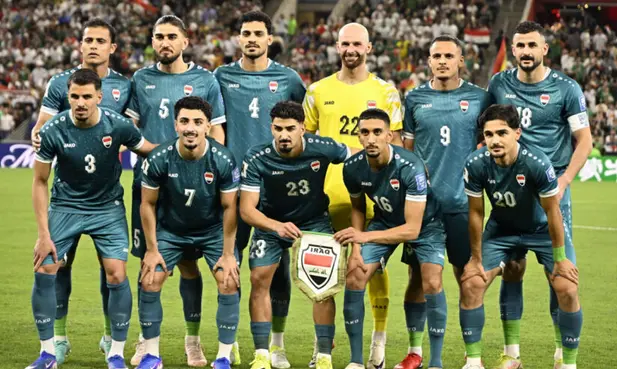
World Cup 2026. Iraq
A promise kept, 10 years later
In 2016, a 20-year-old striker named Ayman Hussein was asked what he would give the national team that the legendary Younis Mahmoud — scorer of the 2007 Asian Cup winning goal — had not. He replied: “I will take Iraq to the World Cup.” Ten years later, his 53rd-minute goal against Bolivia (2-1) delivered exactly that. The country declared a public holiday.
The qualifying route was characterised by the persistence that defines this team. Third in their Asian group behind South Korea and Jordan. Into a fourth-round mini-tournament, where they beat Indonesia (1-0) and drew with Saudi Arabia (0-0) — only to be eliminated on goal difference. Into intercontinental play-offs, where a dramatic 2-1 win over the UAE — with the decisive penalty scored in the 17th minute of added time — set up the Bolivia tie.
Playing style and key players
Head coach Graham Arnold (62) — who managed Australia at two World Cups and lost to Iraq in the 2007 Asian Cup group stage — has built Iraq’s system around pragmatism. A 4-4-2 against strong opponents, a 4-2-3-1 when the talent gap allows more ambition. Direct football: long balls to two physically imposing strikers, wide players who track back, midfielders who screen and close. Nothing revolutionary. Nothing needs to be revolutionary when a team understands its identity and executes it with discipline.
- Ayman Hussein — the man who promised and delivered. 32 goals in 89 appearances, the leading scorer in the current squad. His goals against Palestine, Oman, the Philippines (hat-trick contribution) and the decisive strike against Bolivia are the backbone of this qualification story. On the World Cup stage against France, Norway and Senegal, his role will be to hold the ball, unsettle defenders and create the moments from which Iraq can build.
- Ali Al-Hamadi (24) — the young partner in attack with over 150 club appearances across English football, including 11 Premier League games for Ipswich. Not prolific at international level yet, but capable of the decisive contribution — he scored against the UAE and Bolivia in the qualifying run.
- Amir Al-Ammari (28, Cracovia) — the midfield anchor who keeps the system functioning. His goal and assist against the UAE, and the nerveless penalty he converted in the 17th minute of added time in the same game, established him as one of the quietly decisive figures in this squad.
- Graham Arnold — took the Iraq job in 2025 after a long tenure with Australia. His experience at two World Cups with the Socceroos has given him a clear understanding of what a team of Iraq’s resources can realistically achieve against elite opposition.
Who Advances from Group I
| Team | 1xBet |
|---|---|
| France | 1.028 |
| Norway | 1.19 |
| Senegal | 1.48 |
| Iraq | 3.90 |
France at 1.028 is the bookmakers’ way of saying this is not a betting market — it is an acknowledgement of reality. Two-time world champions with Mbappe, Olise, Dembele, Saliba and Kante do not exit in the group stage of a tournament. Not in this group. Norway (1.19) are priced as strong favourites to advance, and the confidence is earned — eight wins from eight in qualifying, 16 Haaland goals, Odegaard running the show. The only scenario in which Norway fail to advance involves a genuine collapse in form or a catastrophic injury. Senegal (1.48) are the most interesting price in the group. A 1.48 on the AFCON winners — stripped of the trophy, arriving furious — seems almost generous to the bookmakers. Their direct match against Norway will likely determine second place, and nothing about that fixture is a foregone conclusion. Iraq (3.90) — the price implies roughly a one-in-four chance of advancement, which feels slightly generous given the quality of their three opponents. But the bookmakers know better than to entirely dismiss a team that converted a 17th-minute-of-extra-time penalty to get here.

Group I. World Cup 2026. Odds at 1xBet
Who Wins Group I
| Team | 1xBet |
|---|---|
| France | 1.444 |
| Norway | 3.78 |
| Senegal | 8.00 |
| Iraq | 46.00 |
France (1.444) — almost as short to win the group as to simply advance. The expectation is maximum points or very close to it. If Mbappe and Olise both perform, France will score in every game and keep clean sheets in most. Norway (3.78) — the only realistic challengers for first place. If Haaland produces a dominant early performance and Norway beat Senegal, they could finish above France on goal difference. That scenario requires France to drop points elsewhere, which is possible but unlikely. Senegal (8.00) — first place would require beating Norway and taking points from France. The Lions have the tools to beat Norway; taking points from France is a different challenge. Iraq (46.00) — winning the group would surpass even the 2007 Asian Cup as the greatest achievement in Iraqi football history. The gap between that ambition and the reality of this group is simply too large to bridge.
Our Predictions
Group I produces the most emotional narratives of the entire tournament but the most predictable standings. France win the group. Norway advance from second. The real drama lies in the Norway-Senegal match, which will be one of the most watched games of the group stage — Haaland and Odegaard against Mane and Koulibaly, with a knockout place at stake.
France and Norway advance. Senegal finish third — potentially advancing as one of the best third-placed sides, depending on results elsewhere. Iraq take their points, their dignity and their story back home. Ayman Hussein will have scored at a World Cup. For a country that has been through what Iraq has been through, that alone would already be something worth celebrating.
Other Groups WC-2026 at 1xBet
 Aiden Brooks
