



Group F at the 2026 World Cup
1xBet has Group F as one of the most balanced and genuinely unpredictable quartets of the entire tournament. The Netherlands arrive as clear favourites — three-time World Cup finalists with a squad built on Premier League and Bundesliga regulars. Japan come with a tactical identity, a long-term national vision and the best qualifying record in Asia. Sweden scraped through a play-off that almost didn’t happen, saved by one man and a new coach who knows the country well. And Tunisia — the first African side ever to win a World Cup match — arrive for their seventh tournament still dreaming of a first knockout round appearance.
Group F Overview
Four teams with four legitimate stories and no guaranteed outcome beyond the very top. The Netherlands bring the weight of three final defeats and a generation determined to finally lift the trophy. Japan arrive with their most talented squad ever assembled. Sweden nearly didn’t make it at all, rescued by the brilliance of one striker and a coaching change that transformed the mood overnight. And Tunisia bring defensive discipline, collective organisation and a 48-year wait for a moment of genuine tournament history.
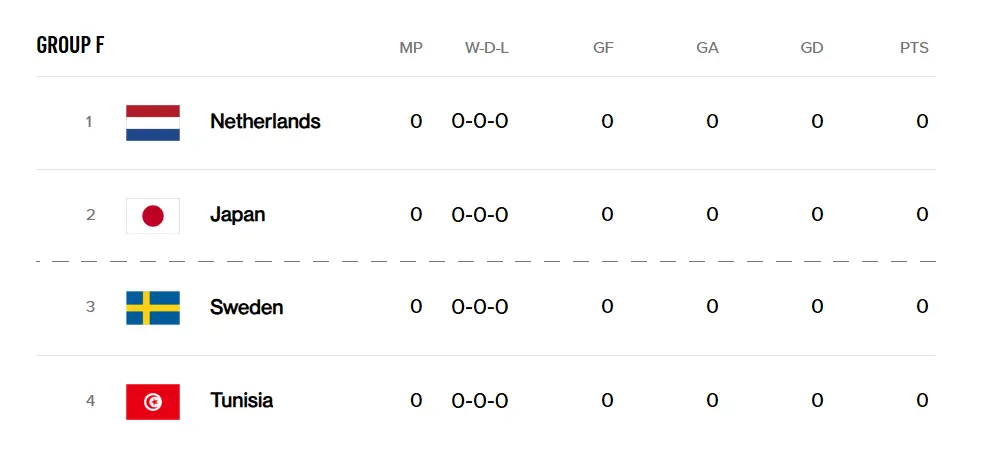
World Cup 2026 Group F
Netherlands
Three finals, zero titles — and a squad ready to change that
The Netherlands have reached the World Cup final three times — 1974, 1978 and 2010 — without ever winning it. That persistent near-miss narrative shapes everything about how Dutch football sees itself. The Clockwork Orange era of Cruyff, Neeskens and Rep; the Van Basten generation; the 2010 side that lost to Spain in extra time. All brilliant, none sufficient. Now Ronald Koeman, who won the European Championship with the Netherlands as a player in 1988, brings a new generation to North America.
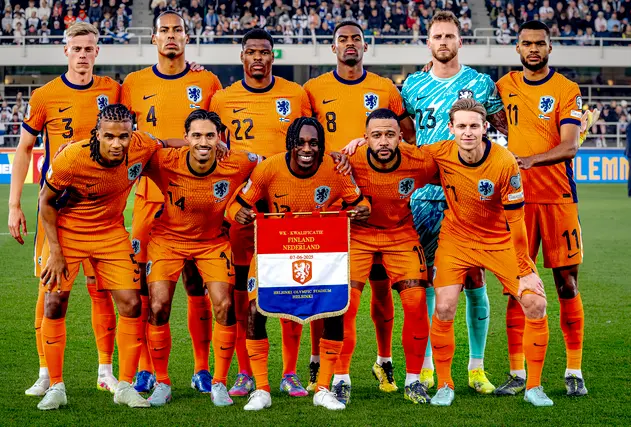
World Cup 2026. Netherlands
Flawless qualification
The Netherlands won Group G of European qualifying with authority. Their most eye-catching result came on the final matchday: a 4-0 dismantling of Lithuania, with three goals in four second-half minutes from Gakpo, Xavi Simons and Malen. Twenty points from the group, direct qualification secured with a game to spare.
Playing style and key players
Koeman builds his team around positional discipline, intelligent pressing and the quality of individual players in transitional moments. The squad blends experience — Van Dijk in his mid-thirties, still formidable — with a new generation of technically sophisticated footballers.
- Virgil van Dijk (34, Liverpool) — the captain. At his best, the most complete centre-back in world football. He organises the defensive line, wins aerial duels and sets the tone for the entire unit. His partnership with the younger Mickey van de Ven will be central to how far this side goes.
- Mickey van de Ven (25, Tottenham) — Van Dijk’s partner in central defence. Rapid, composed and increasingly reliable at the highest level.
- Ryan Gravenberch (23, Liverpool) — the midfielder who has finally found his best football at Anfield after a difficult spell at Bayern Munich. Powerful, technically smooth and capable of driving forward from deep.
- Xavi Simons — the most exciting creative talent in the squad. Quick, technically inventive and increasingly clinical. This World Cup is the stage for him to announce himself globally.
- Cody Gakpo (Liverpool) — the wide forward whose versatility allows Koeman to deploy him anywhere across the front three. Composed in front of goal and effective when pressing.
- Bart Verbruggen (23, Brighton) — the first-choice goalkeeper, remarkably young for this stage of his career. His performances at Brighton have earned genuine trust from the national setup.
- Jeremy Frimpong (Bayer Leverkusen) — the explosive right wing-back, one of the fastest players at the tournament. His attacking runs from deep create enormous problems for teams defending in a low block.
Japan
The Blue Samurai’s most realistic shot at history
Japan were the first team to qualify for the 2026 World Cup. They have appeared at every tournament since 1998 without missing a single edition. They have reached the round of 16 four times. They have never gone further. The country has a formally stated national goal of winning the World Cup by 2050 — and right now, in 2026, they have their most talented squad ever assembled.
The journey to this point is remarkable. Professional football only arrived in Japan in 1993 with the creation of the J-League. Within three decades, the country has built one of the most commercially successful domestic leagues in the world and exported a generation of players to the best clubs in Europe.
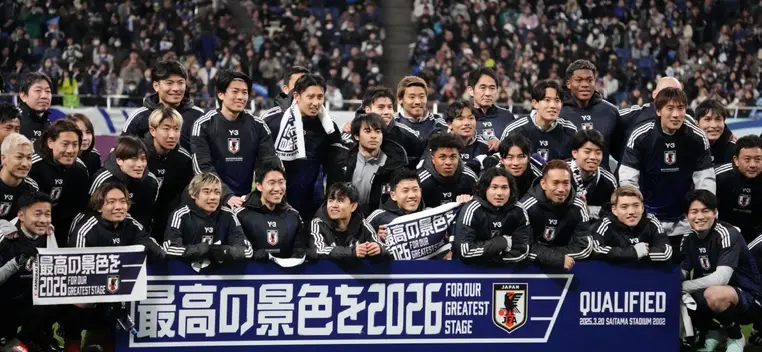
World Cup 2026. Japan
Qualifying without drama
The first qualifying round produced six wins from six, 24 goals scored, none conceded. The second round, against Australia, Saudi Arabia, China, Bahrain and Indonesia, brought a single home defeat (0-1 to Australia) and otherwise dominant performances: 7-0 against China, 5-0 against Bahrain, 4-0 against Indonesia. Japan finished four points clear of Australia.
A coaching change before the tournament
Hajime Moriyasu, who guided Japan through their most successful modern qualifying cycles, stepped down. His replacement is Shunsuke Nakamura — a genuine Japanese football legend who won nearly 100 caps, two Asian Cups and three Scottish Premier League titles with Celtic, and was twice named J-League MVP. As a coach he has only worked at club level since 2023. The appointment carries both reverence and risk.
Playing style and key players
Japan play a 4-2-3-1 or 4-4-2 depending on the opponent. Two disciplined defensive midfielders protect a back four; the wide midfielders press relentlessly in attack and cover tirelessly in defence. Everything is fast, precise and designed to get the ball quickly to the most creative players.
- Kaoru Mitoma (28, Brighton) — the most expensive player in the squad and its most electrifying attacker. Four seasons in the Premier League have made him one of its most reliable creative threats. 10 goals in the 2024-25 campaign. Technically exceptional and capable of creating from nothing on the left wing.
- Takefusa Kubo (24, Real Sociedad) — the gifted right-sided attacker who spent years being described as Japan’s greatest talent without quite fulfilling it. That time has passed. Kubo is now consistently brilliant for his club, combining directness with creativity and goals.
- Wataru Endo (Liverpool) — the defensive midfielder who does the work nobody appreciates until it stops happening. He holds everything together: covering, pressing, linking the defensive and attacking phases. Reportedly attended Jurgen Klopp’s sessions with a notebook.
- Shunsuke Nakamura — as a coach, an unknown quantity at international level. As a figure, someone who commands immediate respect from every Japanese player in this squad.
Sweden
Viktor Gyokeres, Graham Potter and a qualification campaign to forget
Sweden’s road to this World Cup was one of the most chaotic in European qualifying. Placed in a group with Switzerland, Kosovo and Slovenia, they finished last — zero wins in six games, 12 goals conceded, unable to score against Kosovo twice. A humiliation under Jon Dahl Tomasson, whose tactical experiments left players confused and miscast.
Sweden survived through the UEFA Nations League route to the play-offs, and only then did the picture change. New coach Graham Potter — who built his reputation at Brighton before difficult spells at Chelsea and West Ham — was appointed with a simple brief: get Sweden to the World Cup. He did it without overcomplicating things. Against Ukraine (3-1) and Poland (3-2) in the play-offs, he simply let the best players play. Viktor Gyokeres scored four of the six goals.

World Cup 2026. Sweden
Playing style and key players
Potter’s Sweden are tactically flexible. With both Gyokeres and Isak available, a 4-4-2 with two strikers makes tactical sense. Without Isak, a 3-4-2-1 with Gyokeres as the lone reference point proved more effective in the play-offs — giving Sweden more fluidity and better balance, which creates a genuine selection dilemma for Potter at the tournament.
- Viktor Gyokeres (Arsenal) — the centre of everything. Already being discussed alongside Haaland and Mbappe as the defining striker of his generation. He single-handedly carried Sweden to this World Cup. At 27, this is his moment.
- Alexander Isak (Liverpool) — the gifted, injury-prone forward who was made a scapegoat by Swedish fans for the qualifying disaster. When fit and motivated, he is one of the most technically complete centre-forwards in Europe. Whether Potter can coax the best from him alongside Gyokeres is the tournament’s most interesting Swedish subplot.
- Anthony Elanga (Newcastle) — consistently delivers for the national team despite dividing opinion at club level. Scored an important goal in the Ukraine play-off, pressed relentlessly and moved intelligently without the ball.
- Graham Potter — started his management career at Ostersund, a small Swedish town of fewer than 100,000 people, and took them from the fourth division to European football. That formative experience made his reputation; Sweden felt it appropriate to bring him home.
Tunisia
Seven World Cups, zero knockout rounds — and one more attempt
Tunisia were the first African team to win a World Cup match — a 3-1 victory over Mexico in Argentina in 1978. They also held a powerful West Germany side to a goalless draw in the same group. A pioneering performance that has never been built upon in tournament football.
Six subsequent World Cups have produced a familiar pattern: defensive solidity, a point or two, early elimination. The closest Tunisia came to the knockout rounds was in Qatar 2022, where they beat France (1-0 — though France had already qualified and rested their starters) but went out on goal difference. The dream of a first-ever round of 16 appearance is the only real motivation this squad needs.
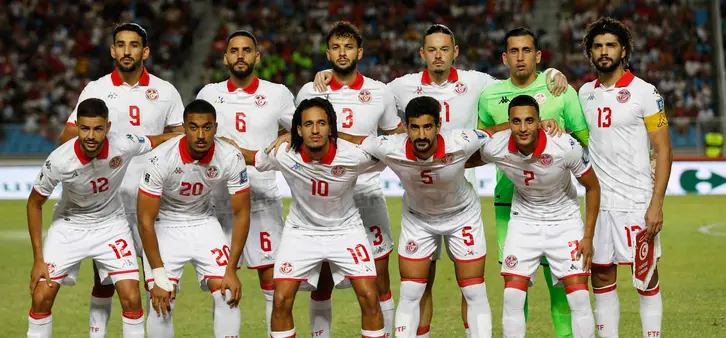
World Cup 2026. Tunisia
Qualifying without conceding a single goal
Tunisia navigated a group containing Namibia, Liberia, Equatorial Guinea, Malawi and São Tomé and Príncipe with extraordinary efficiency: 13 points clear at the top, a 22-0 goal difference and not a single goal conceded across the entire campaign. The only point dropped came in a goalless draw in Namibia. Tunisia were one of just two African qualifiers — alongside Ivory Coast — to finish with a clean qualifying defensive record.
Playing style and key players
Tunisia’s philosophy is blunt and effective: concede as little as possible, take whatever opportunities arise on the counter and grind out results through collective organisation. There is no Salah, no Osimhen, no Mane in this squad — just hard-working professionals from European mid-table clubs who know exactly what their roles are.
- Hannibal Mejbri (23, Burnley) — the squad’s most technically gifted and most volatile player. Born and raised in France, he went through the French youth system before choosing Tunisia in 2021. A former Manchester United academy product, his creativity in central midfield is the team’s primary source of invention. He can also collect a red card at any moment — both things are equally true.
- Ellyes Skhiri (30, Eintracht Frankfurt) — the steel in the engine room. Played every minute of all four AFCON matches and ran 120 minutes in the round of 16. He does everything the team needs in the middle of the pitch and makes the system function.
- Montassar Talbi (27, Lorient) — the first-choice centre-back and the team’s most important defensive figure. Physical, combative and effective at set-pieces in both boxes. Former Rubin Kazan player under Leonid Slutsky.
- Hazem Mastouri (28, Dynamo Makhachkala) — the starting centre-forward. Not a prolific scorer, but a modern striker who contributes to the team’s structure, pressing and link play.
- Sabri Lamouchi — the new head coach. As a player he won Ligue 1 with Monaco and the French Cup with Auxerre before switching international allegiance from Tunisia to France. Thirty years later, he returns as head coach. His most relevant credential is leading Ivory Coast to the 2014 World Cup, narrowly missing the knockout rounds.
Who Advances from Group F
| Team | 1xBet |
|---|---|
| Netherlands | 1.06 |
| Japan | 1.27 |
| Sweden | 1.42 |
| Tunisia | 2.09 |
The Netherlands at 1.06 are treated as near-certainties, which makes sense. Three World Cup finals, a settled squad and the quality of Van Dijk, Gravenberch and Simons running through the spine. The only realistic scenario in which they fail to advance involves an injury crisis — and that is not remotely probable. Japan (1.27) sit in second with a price that reflects genuine confidence in their system. They have reached the round of 16 at four of their last seven World Cups and this is their most talented squad yet. Sweden (1.42) are priced as moderate favourites to qualify — reflecting the quality of Gyokeres and Isak while acknowledging the volatility of this squad. Their qualifying disaster is fresh in the memory. Tunisia (2.09) are the outsiders, but not implausibly so — their defensive record in qualifying was exceptional, and against Sweden there is a genuine opportunity.

Group F. World Cup 2026. Odds at 1xBet
Who Wins Group F
| Team | 1xBet |
|---|---|
| Netherlands | 1.69 |
| Japan | 4.30 |
| Sweden | 5.00 |
| Tunisia | 10.20 |
The Netherlands (1.69) are clear favourites for first place. Koeman’s side will be targeting three wins — and with Wirtz, Musiala and Kimmich available, that ambition is entirely grounded in reality. Japan (4.30) are the only realistic challengers for first place. Their tactical discipline, pressing intensity and the quality of Mitoma and Kubo give them tools to trouble any opponent. The Netherlands vs Japan fixture is the defining match of Group F. Sweden (5.00) — first place requires beating both the Netherlands and Japan, which demands everything to go right. With Gyokeres in the form he showed in the play-offs, it is not impossible, but it is the least likely of the realistic scenarios. Tunisia (10.20) — the wide spread between bookmakers is telling, and that price at 1xBet reflects genuine scepticism about their ceiling in this group.
Our Predictions
Group F will be decided across two key fixtures: Netherlands vs Japan and Sweden vs Tunisia. The Dutch advance — that is not in question. The second spot comes down to whether Japan’s system proves more reliable than Sweden’s individual talent. Our view is that it does: Japan have been to the round of 16 three consecutive times, their squad is organised and experienced in this format, and the coaching change brings motivational energy rather than tactical disruption.
Sweden finish third. If Gyokeres fires and Potter finds the right balance, they could push Japan for second — but qualifying through two play-off games against Ukraine and Poland is not the same preparation as navigating ten Asian qualifying matches unbeaten. Tunisia will take points off Sweden if Talbi and Skhiri can contain Gyokeres — a significant if — but the Netherlands and Japan will be beyond them. Seven World Cups, zero knockout rounds. In Group F, that record is likely to reach eight.
Other Groups WC-2026 at 1xBet
 Aiden Brooks
